Collapsed Sewer Line, Clay Pipe & Orangeburg Repair in Cleveland
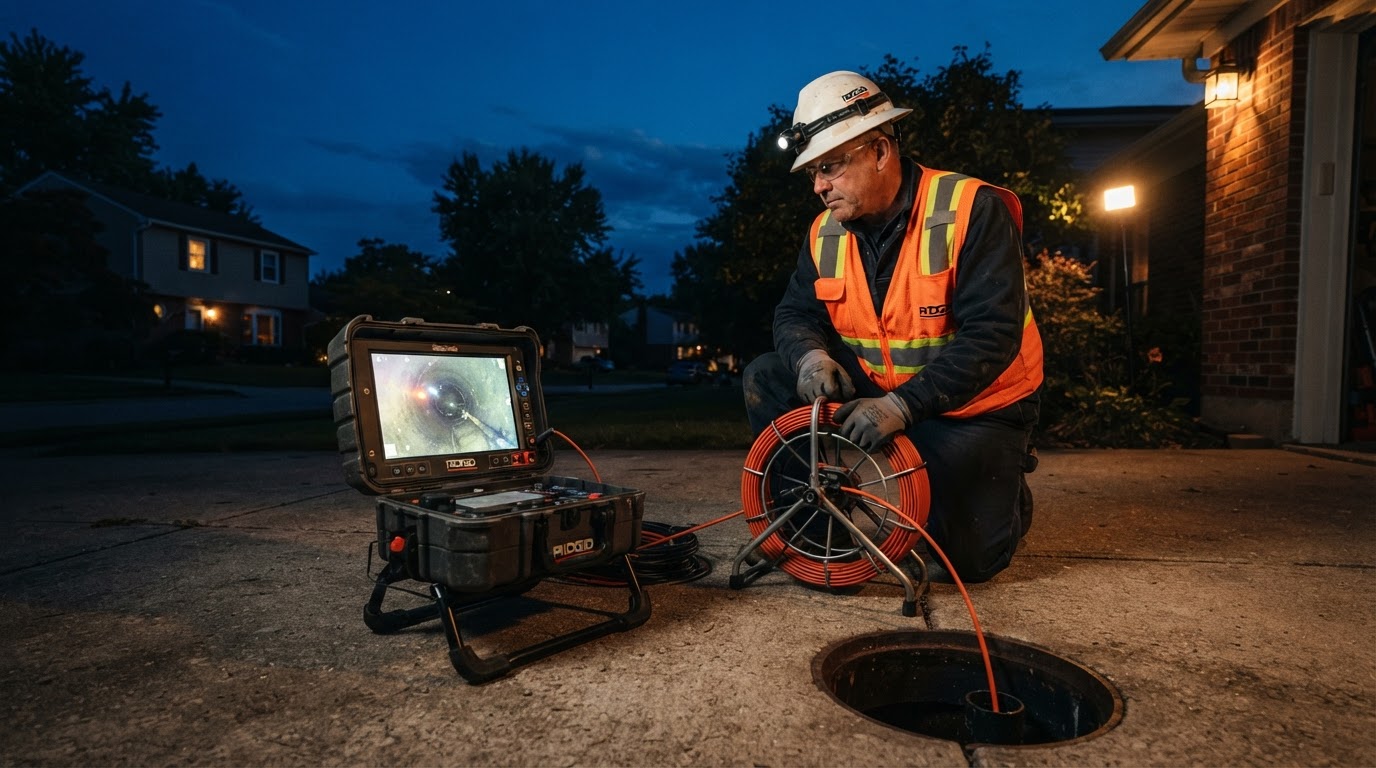
HD Sewer Camera Inspection — 100% Credited Toward Any Repair. Pinpoint the exact collapse, offset joint, or pipe belly on live video before deciding on pipe bursting or excavation.
Request Urgent Camera Diagnosis & Repair Quote
100% of the inspection fee is credited toward any repair.
Key Facts
- Multi-fixture basement backups and yard sinkholes signal structural pipe failure
- Stop water use and avoid chemical drain cleaners immediately
- Pipe bursting and targeted spot excavation resolve collapses where CIPP lining cannot
- HD camera inspection fee 100% credited toward any repair
How do you repair a collapsed sewer line in Cleveland?
A collapsed sewer line in Cleveland is repaired by first clearing standing sewage so an HD camera can locate the failure depth, then using trenchless pipe bursting or targeted spot excavation to install new PVC or HDPE pipe — because cured-in-place lining cannot restore a crushed host pipe and a belly may need re-grading.
What Are the Warning Signs of a Collapsed or Failing Sewer Line?
A sewer lateral rarely fails silently. The signs below point to structural pipe failure — not a simple clog — and mean the line needs a camera scope before any repair is authorized. See how our HD camera inspection works.
Sewage backing up into basement floor drains whenever a toilet flushes or a washing machine drains
Foul sewer gas odors indoors or near the yard above the buried sewer path
Sudden sinkholes, soggy patches, or greener grass stripes above the lateral
Repeated backups returning within days of cable snaking — a sign the pipe is structurally failing, not just clogged
What Should You Do (and NOT Do) Right Now During a Sewer Backup?
A main-line backup is a safety situation, not just a plumbing nuisance. Follow this checklist until a qualified sewer professional arrives.
DO
- Shut off water-using appliances (washing machine, dishwasher, sinks) immediately to stop the flow into a backed-up line.
- Keep children and pets away from any backed-up basement floor water — it carries bacteria and contaminants.
- Clear access to your basement cleanout cap so a technician can reach the lateral quickly.
- Schedule a professional HD camera scope to find the exact failure before authorizing any repair.
DO NOT
- Pour caustic chemical drain openers into backed-up fixtures — they pool in the line and create burn and contamination hazards.
- Keep flushing toilets to 'force' a clog through — every flush adds wastewater that has nowhere to go.
- Attempt any yard digging without contacting Ohio811 (call 811) at least 48 hours in advance, as required by Ohio law.
Why Do Cleveland Clay, Orangeburg, and Cast-Iron Sewer Pipes Fail?
Greater Cleveland's housing eras left three legacy pipe materials underground, and each one fails in its own way. Knowing which material your home has tells you what to expect — and which repair method applies.
Vitrified Clay Tile Pipe
Common in pre-1960 Cleveland, Lakewood, and Cleveland Heights homes
Vitrified clay tile is a fired-clay sewer pipe made in short sections joined with mortar. Brittle clay sections shift under Northeast Ohio freeze-thaw soil cycles, letting tree roots enter unsealed mortar joints and crack pipe walls until sections separate or collapse.
Orangeburg Pipe
Installed primarily between the late 1940s and 1970
Orangeburg is a bituminized pipe made of wood pulp and coal-tar pitch. It absorbs ground moisture over decades, causing layers to delaminate, blister, ovalize, and collapse completely under soil weight. Deformed Orangeburg usually cannot be lined and is replaced by pipe bursting.
Cast-Iron Drain Pipe
Common beneath basement slabs and older foundations
Cast iron is a metal drain pipe that rusts from the inside out. Over 50+ years of service it suffers internal rust tuberculation (rough mineral buildup), bottom-wall corrosion channeling, and joint separation that shrinks flow and eventually breaks the pipe open.
Repair vs. Replace: Which Method Fixes a Collapsed, Bellied, or Cracked Pipe?
The right fix depends on what the camera actually shows. Lining works on intact pipes; bursting replaces collapsed ones; a belly may need re-grading. Here is how the decision breaks down.
| Pipe Condition | Recommended Method | How It Works |
|---|---|---|
| Cracked clay / root-intruded joints (intact round shape) | CIPP Trenchless Pipe Lining | A resin-soaked liner is inverted into the intact pipe and cured, sealing cracks and root entry points from the inside without digging. |
| Collapsed or crushed clay / delaminated Orangeburg pipe | Trenchless Pipe Bursting or Targeted Spot Excavation | A bursting head fractures the failed pipe and pulls new seamless HDPE pipe through the same path; spot excavation opens only the collapsed section. |
| Deep standing-water belly (negative-slope sag) | Open-Trench Excavation to Re-Grade | The sagging section is excavated, bedding stone is re-graded, and new pipe is laid at the correct gravity pitch so wastewater flows instead of pooling. |
Sewage backing up? Get a camera diagnosis before any digging.
Call (216) 555-0199 and we will run the HD camera scope, pinpoint the collapse or belly on live video, and credit 100% of the inspection fee toward any repair you book.
Call (216) 555-0199Permits, Homeowner Responsibility & Financial Assistance in Cleveland
Under Cleveland Water Pollution Control rules, the homeowner owns and is responsible for the sewer lateral from the house all the way out to the street main — so a collapsed lateral is the property owner's repair, not the city's. Confirm your exact lateral ownership line and any municipal permit requirements with your local building department before work begins.
Municipal building or sewer permits are required for lateral replacement in most Cuyahoga County cities, and a qualified sewer contractor pulls those permits on your behalf. Before any excavation, Ohio law also requires contacting Ohio811 (call 811) at least 48 hours in advance so underground utilities can be marked — this protects you from striking gas, electric, and water lines.
Income-eligible Cleveland owner-occupants may qualify for assistance through the NEORSD Cost-Saving Plumbing Repair Program. Check current eligibility and program details directly with NEORSD before scheduling a repair.
Frequently Asked Questions
Pinpoint the collapse before you dig
Trenchless CIPP lining and pipe bursting often require minimal or no yard or driveway excavation, with many lining jobs completed in about a day depending on pipe condition and access.
Call (216) 555-0199