Main Sewer Line Repair & Lateral Inspection in Cleveland Heights, OH
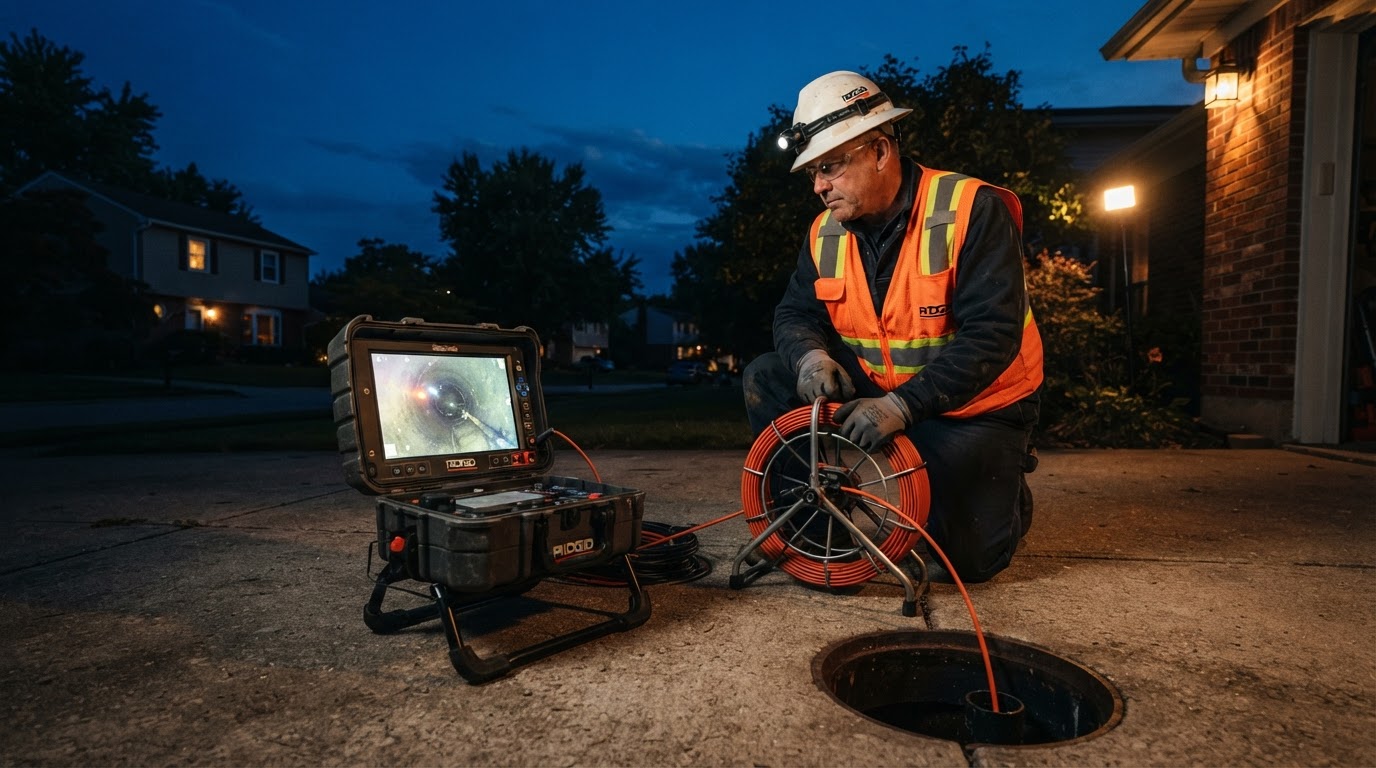
HD Sewer Camera Inspection — 100% Credited Toward Any Repair. Get recorded video footage and exact depth markings before digging near Cleveland Heights retaining walls, brick streets, or mature trees.
Request a Cleveland Heights Sewer Scope & Quote
100% of the inspection fee is credited toward any repair.
Key Facts
- Protects Cleveland Heights' mature oak canopies, stone retaining walls, and historic brick streetscapes
- Supports Point-of-Sale real estate inspection compliance
- Rehabilitates pre-1940 vitrified clay laterals with minimal digging
- HD camera inspection fee credited 100% toward repair
How does trenchless main sewer line repair protect Cleveland Heights properties?
Trenchless CIPP pipe lining and pipe bursting restore cracked, root-intruded clay sewer laterals in Cleveland Heights through existing cleanouts or small access points — avoiding open-trench excavation beneath terraced front yards, stone retaining walls, slate walkways, and century-old street trees.
Why Do Historic Cleveland Heights Homes Experience Chronic Sewer Lateral Issues?
Cleveland Heights is one of Northeast Ohio's most architecturally rich suburbs, and that character is exactly what makes its sewer laterals so failure-prone. The housing stock runs from 1910s–1930s Tudors and brick colonials to multi-family residences across neighborhoods from Cedar Fairmount and Coventry Village to Shaker Lakes and Forest Hill. Those homes are now 90 to 115 years old, and the vitrified clay tile laterals buried beneath them are at or well past their design life.
Two Cleveland Heights characteristics drive most of the repairs we see. The first is the city's century-old tree canopy. Towering oaks and sycamores — many planted when these homes were built — have root systems that extend far beyond the canopy itself. Those roots seek moisture, and the rigid mortar joints of vitrified clay pipe are an open invitation. After a hundred years of freeze-thaw the joints have separated, and roots force their way in, grow into dense masses, and block the line. Root intrusion from century-old trees is the dominant cause of main-line backups in the Heights. See how an HD camera inspection pinpoints that exact intrusion before any work is planned.
The second is topography. Cleveland Heights sits on the hilly East Side, and its lots are defined by terraced front yards, stone retaining walls, slate walkways, and historic brick streets. Traditional open-trench excavation across a terraced lot means cutting through retaining walls and steps, disturbing mature trees, and restoring brick street aprons — disruptive, slow, and expensive. Trenchless methods that work through existing cleanouts or small access points avoid nearly all of that. Learn how collapsed clay laterals are repaired.
1910s–1930s Tudors & Brick Colonials
Century homes from Cedar Fairmount to Forest Hill with original vitrified clay laterals now 90–115 years old.
Century-Old Oak & Sycamore Roots
Mature root systems infiltrating separated clay joints — the dominant cause of main-line backups in the Heights.
Terraced Yards & Stone Walls
Hilly East Side lots with retaining walls and brick streets make open-trench digging especially disruptive.
Cleveland Heights Point-of-Sale (POS) Inspections & Real Estate Sewer Scopes
Cleveland Heights requires sellers to obtain a Point-of-Sale Certificate of Inspection prior to property transfer, per the city's official Point-of-Sale Inspection program. Because municipal Point-of-Sale and dye-test rules vary by city and can change over time, sellers and buyers should verify the current lateral and dye-test requirements directly with the Cleveland Heights Housing Inspection department. [NEEDS VERIFICATION: whether a sewer dye test is included in Cleveland Heights POS inspection]
Ordering an HD camera scope early in the listing process prevents last-minute closing delays. The recorded video footage and surface depth markings give buyers, sellers, and realtors the documentation they need to satisfy inspection contingencies, negotiate seller credits, or schedule a trenchless repair before closing — without tearing up a terraced front yard or a brick street. Read more about Point-of-Sale and pre-purchase sewer scopes.
Preserving Mature Trees, Terraced Yards & Brick Streets With No-Dig Repair
Cured-in-place pipe (CIPP) lining rehabilitates the lateral from inside the pipe. A resin-saturated liner is inserted through an existing cleanout or small access point and cured into a smooth, jointless new pipe within the old clay or cast-iron host — no continuous trench, no cutting through stone retaining walls, slate walks, or terraced beds, and no disturbance to the century-old oaks and sycamores above the line. When properly installed in a structurally sound host pipe, CIPP lining meets the NASSCO 50-year structural design standard.
For sections too far gone to line, trenchless pipe bursting pulls a new seamless HDPE pipe through the old path while fracturing the failed pipe outward, using small launch and reception pits at each end instead of opening the whole yard. Both methods often require minimal or no yard or driveway excavation, with many lining jobs completed in about a day depending on pipe condition and access. Compare all trenchless options and see how hydro-jetting prepares the pipe before a liner is installed.
Comparing Main Sewer Line Repair Options in Cleveland Heights
The right method depends on what the camera shows and how much of your historic Cleveland Heights hardscape you want to preserve. Here is how the three options compare on terraced yards, retaining walls, and mature trees.
| Method | Impact on Terraced Yards, Retaining Walls & Mature Trees | Ideal Pipe Condition | Permit / POS Closing Timeline |
|---|---|---|---|
| CIPP Trenchless Pipe Lining | Installs through cleanouts or small access points — no continuous trench through terraced yards, stone retaining walls, or beneath mature oaks and sycamores. | Best for intact but cracked or root-intruded vitrified clay and cast iron with a round, sound host pipe. | City of Cleveland Heights permit filed; fits a Point-of-Sale closing timeline with many lining jobs done in about a day. |
| Trenchless Pipe Bursting | Uses small launch and reception pits at each end rather than opening the whole front yard — preserves brick street aprons, slate walks, and century-old street trees. | Best for collapsed or badly failed clay that cannot be lined; pulls new seamless HDPE pipe through the old path. | City of Cleveland Heights permit filed, Ohio811 locate for entry and exit pits, municipal inspection before backfill. |
| Open-Trench Excavation | Opens a continuous trench across the full terraced front yard, retaining wall, and walkway — the most disruptive option on a hilly Cleveland Heights lot, with the highest restoration cost. | Reserved for deep negative-slope bellies that must be re-graded, or sections too far gone for any trenchless method. | City of Cleveland Heights permit, Ohio811 locate, street-opening coordination if work crosses the curb, and municipal inspection before backfill. |
Slow drains in your Cleveland Heights century home? See the problem on camera first.
Call (216) 555-0199 and we will run the HD camera scope with 512 Hz surface depth locating, then credit 100% of the inspection fee toward any lining, bursting, or hydro-jetting you book.
Call (216) 555-01994-Step Checklist for Cleveland Heights Homeowners & Sellers
Whether you are listing a century home or dealing with a slow main line, work through these four steps before authorizing any repair or digging.
- 1Schedule an HD video camera inspection with 512 Hz surface depth locating before signing any excavation contract.
- 2Confirm City of Cleveland Heights building/sewer permit and contractor registration requirements with the city.
- 3Contact Ohio811 before any exterior access pit digging so underground utilities are marked.
- 4Apply 100% of your camera inspection fee toward the repair invoice when you book the work.
Main Sewer Line Repair in Cleveland Heights — FAQ
Protect your Cleveland Heights hardscape — scope before you dig
Trenchless CIPP lining and pipe bursting often require minimal or no yard or driveway excavation, with many lining jobs completed in about a day depending on pipe condition and access.
Call (216) 555-0199