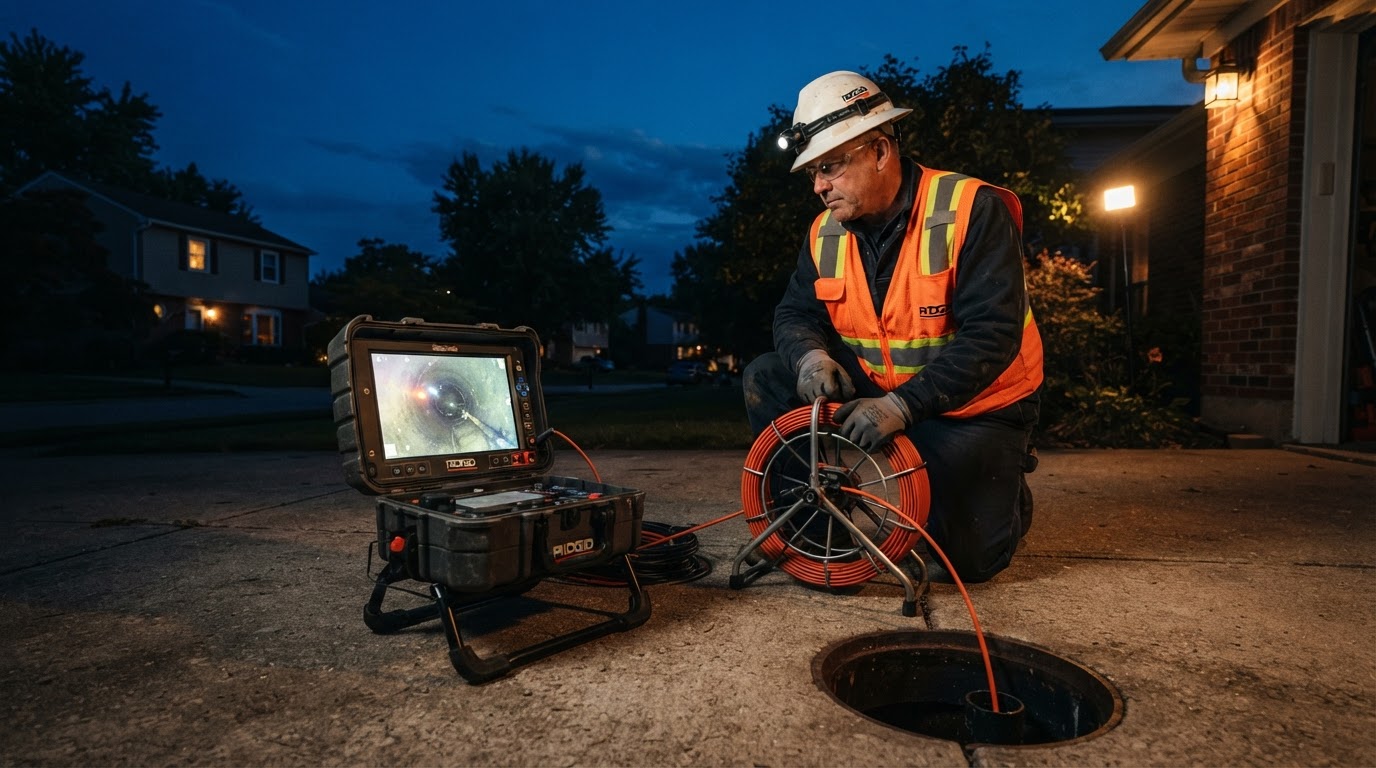
High-Pressure Hydro Jetting & Drain Cleaning in Cleveland, OH
HD Sewer Camera Inspection — 100% Credited Toward Any Repair or Hydro-Jetting Service. Inspect pipe integrity first before high-pressure cleaning begins.
Request Hydro-Jetting & Camera Check
100% of the inspection fee is credited toward any jetting or repair.
Key Facts
- 360-degree pressurized water scouring removes roots, grease, and scale
- Mandatory pre-jet HD camera inspection credited 100% toward service
- Essential prep step before trenchless CIPP lining
- Residential lateral and commercial grease-line capability
What is hydro jetting and how does it clear Cleveland sewer lines?
Hydro jetting sends multi-directional, high-pressure water through your sewer line to scour tree roots, hardened grease, and cast-iron scale off the full pipe wall — not just punch a hole through the clog. We run an HD camera inspection first to verify the pipe is structurally safe to clean, and that fee is credited 100% toward the jetting.
What Is High-Pressure Hydro Jetting?
Hydro jetting is a drain-cleaning method that uses a specialized nozzle fed through your sewer line to blast high-pressure water — typically thousands of PSI — in forward and backward directions at the same time. The water scours the entire inside wall of the pipe in a 360-degree pattern, flushing roots, grease, scale, and sludge downstream and out of the line.
This is the key difference from traditional mechanical cable snaking. A snake (a rotating metal cable with a cutting head) only punches a narrow tunnel through a blockage. It opens a path so water drains again, but the grease, scale, and root fragments stay stuck to the pipe walls — which is why the clog often comes back. Jetting removes the buildup from the walls, so the pipe is actually clean, not just cleared.
Because jetting uses high pressure, we never start blind. Every job begins with an HD sewer camera inspection that shows us the pipe material, the type and severity of the blockage, and — critically — whether the pipe is structurally sound enough to be safely jetted.
How Does Hydro Jetting Tackle Roots vs. Grease vs. Cast-Iron Scale?
Jetting clears three very different kinds of buildup common in Cleveland-area lines. The nozzle and pressure are matched to what the camera finds:
Tree Root Intrusion
Fine roots enter through separated clay joints in pre-1960 laterals and spread inside the pipe. Root-cutting jetting nozzles shred the mass flush with the wall, then a camera confirms whether the joints need lining to stop re-entry.
Hardened FOG (Fats, Oils, Grease)
FOG coats kitchen and restaurant drain lines and hardens as it cools. Forward and backward high-pressure jets emulsify and flush the grease downstream instead of sliding past it the way a cable does.
Cast-Iron Tuberculation Scale
Older cast-iron pipes build mineral and rust tuberculation that narrows the opening and catches debris. Jetting breaks the scale loose and scours the wall, restoring diameter before a liner is installed.
When the camera shows roots entering through separated clay joints, jetting clears the mass, but the joints stay open — so we often recommend trenchless CIPP lining afterward to seal them permanently. If the line is collapsed or the pipe is failing structurally, see our emergency and collapsed clay pipe repair page instead of jetting.
When Is Hydro Jetting Unsafe for Older Sewer Pipes?
High-pressure water is powerful, and that is exactly why we inspect first. Jetting is not safe for every line. We will not jet a pipe the camera shows is already failing structurally, because the pressure can turn a crack into a collapse. Specifically, we do not jet:
- Severely collapsed clay tile — where the pipe wall has broken inward, pressure can widen the break and send debris downstream.
- Crushed or delaminated Orangeburg pipe — this post-WWII bituminized fiber pipe deforms and delaminates with age, and high pressure can peel it apart further.
- Unvented or fragile pipes — where the pipe is cracked, thin, or poorly supported, water pressure can worsen a structural failure.
This is why the camera inspection is mandatory, not optional. We follow NASSCO pipe cleaning and inspection best practices — NASSCO pipe rehabilitation guidelines describe assessing pipe condition before any rehabilitation or cleaning. If jetting is not safe, we tell you on site and lay out the right repair instead.
Residential vs. Commercial Hydro Jetting in Cuyahoga County
The approach changes with the line. Here is how residential, commercial, and storm-drain jetting compare across the factors that matter:
| Line Type | Common Blockages | Recommended Frequency | Prep / Maintenance Notes |
|---|---|---|---|
| Residential Main Laterals | Tree roots, grease, soap scum, occasional debris | As needed — typically when backups recur or before a lining repair | Camera inspection first; jetting prepares the pipe for CIPP lining when joints are root-damaged. |
| Commercial Restaurants / Multi-Family Grease Lines | Hardened FOG, food solids, sludge buildup | Recurring schedule based on grease load and health-department requirements | Grease-trap and floor-drain jetting keeps lines open and helps pass inspections. |
| Yard / Storm Drain Lines | Leaves, sediment, silt, root intrusion | Seasonally or before heavy Lake Erie rain events | Restores full flow capacity so storm water drains instead of pooling or backing up. |
What Factors Affect Hydro Jetting Cost and Maintenance Frequency?
We do not quote a fixed price without seeing the line, because the work varies. The main factors that drive cost and how often a line needs cleaning are:
- Lateral length — longer runs need more time and water volume to scour the full pipe.
- Severity of the root or grease blockage — heavy, hardened buildup takes longer to break loose than a light coating.
- Cleanout access — an existing, accessible cleanout speeds the job; limited access can add setup work.
- Whether post-jetting CIPP lining is needed — if the camera shows roots entering through damaged clay joints, lining seals them permanently so jetting is not repeated every season.
For a full breakdown of what drives repair and lining pricing, see our trenchless sewer replacement cost guide. The camera inspection fee is credited 100% toward any jetting or repair you book.
Camera-verified hydro jetting across Cuyahoga County.
We inspect pipe integrity first, then clean with high-pressure water — 100% of the inspection fee credited toward your service.
Cleveland Sewer Rules & Preventative Drain Care
In Cleveland and most of Cuyahoga County, the property owner — not the city — owns and maintains the sewer lateral from the home out to the public main. Cleveland Water Pollution Control covers this in their homeowner FAQ. The Northeast Ohio Regional Sewer District explains how the regional conveyance and sewer system works, and stresses keeping fats, oils, grease, and wipes out of sanitary laterals to prevent the buildup that jetting is called in to remove.
Do
- Schedule an HD camera inspection before any high-pressure cleaning so we can verify the pipe is safe to jet.
- Keep fats, oils, grease, and wipes out of your drains — dispose of grease in a sealed container, not the sink.
- Book recurring jetting for commercial grease lines based on your grease load and inspection findings.
- Call right away when multiple drains slow at once — wall buildup only gets worse over time.
Don't
- Don't jet a line the camera shows is collapsed, crushed, or delaminated — high pressure can worsen a structural failure.
- Don't assume snaking fixed the problem if backups keep returning — the walls are still coated.
- Don't pour chemical drain openers into a slow line before a camera scope; they can make the area unsafe to inspect.
- Don't flush wipes, paper towels, or grease down a line you suspect is partially blocked.
Hydro Jetting in Cleveland — FAQ
Camera-verified hydro jetting across Cuyahoga County.
We inspect pipe integrity first, then clean with high-pressure water — 100% of the inspection fee credited toward your service.
Sources & References
- Cleveland Water Pollution Control — Homeowner FAQ
- NEORSD — Conveyance & The Sewer System
- NASSCO — Pipe Rehabilitation
Trenchless CIPP lining and pipe bursting often require minimal or no yard or driveway excavation, with many lining jobs completed in about a day depending on pipe condition and access.